

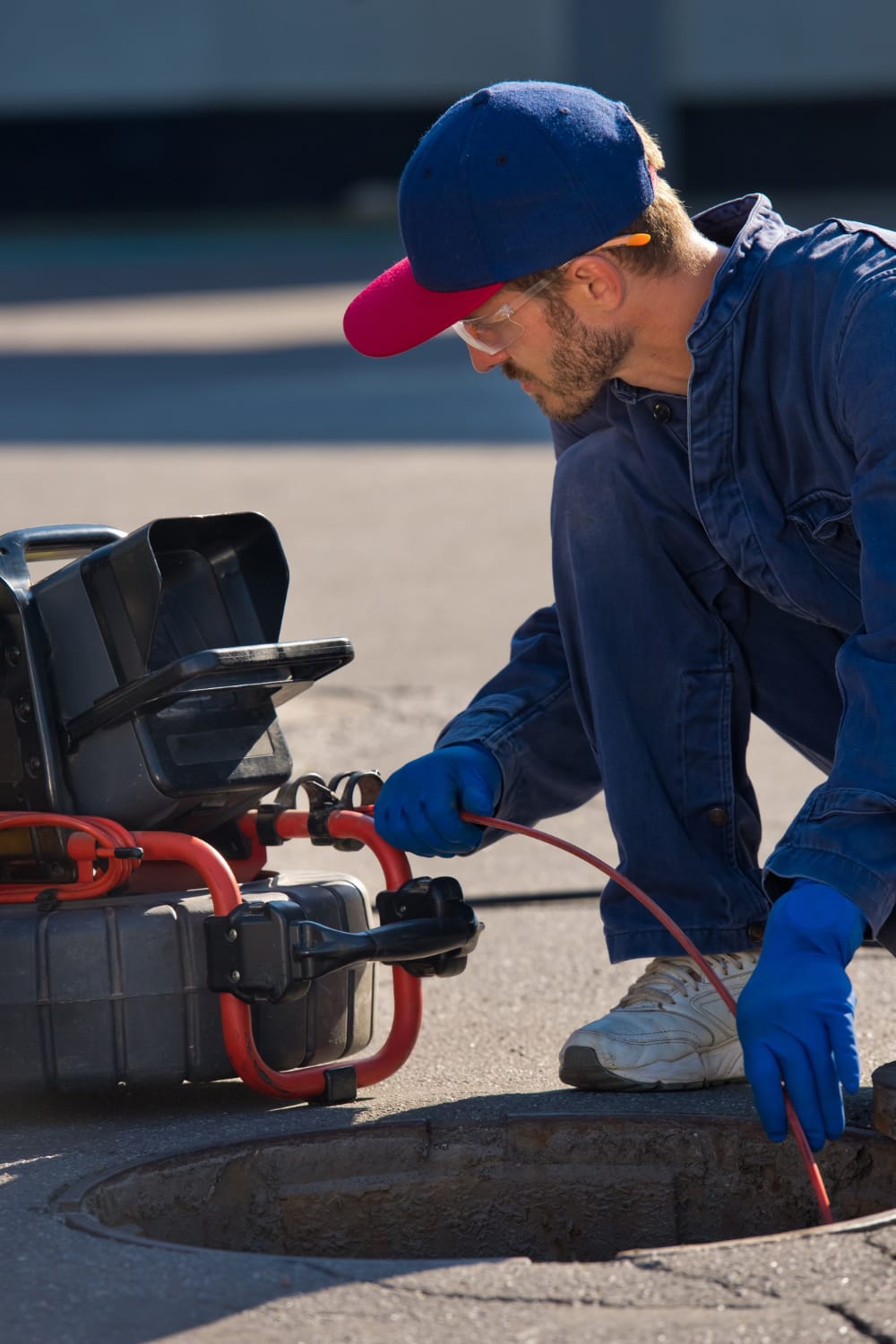
When pipes start backing up or drains slow down, most homeowners face a tough choice: dig up the yard to find the problem or hope a simple fix will work. A sewer camera inspection uses a waterproof camera on a flexible rod to look inside pipes and find blockages, cracks, or other damage without any digging. This technology gives a clear view of what’s happening underground.
This modern inspection method has changed how plumbers diagnose pipe problems. The camera sends live video as it moves through the sewer line, showing everything from tree roots to broken pipes. Homeowners can see exactly what needs fixing instead of guessing.
The process is quick, accurate, and saves money by pinpointing exact problems before any repair work starts. Here’s what you need to know:
- What is a sewer camera inspection?
- Signs you need a sewer camera inspection
- How a professional sewer camera inspection works
- Benefits of sewer camera inspection
- DIY vs professional sewer camera inspection
- Why choose Pro Sewer Repair for sewer camera inspection
Keep reading! Understanding when to get a sewer camera inspection and how it works helps property owners make smart decisions about their plumbing.
What is a sewer camera inspection?
A sewer camera inspection uses specialized waterproof cameras to examine the inside of pipes and identify problems without digging. This technology allows plumbers to spot clogs, cracks, and other issues through real-time video footage.
How sewer cameras work
A plumber inserts a small waterproof camera attached to a flexible cable into the sewer line through an access point called a cleanout. The camera travels through the pipes and sends live video footage back to a monitor above ground.
The flexible cable allows the camera to navigate bends and turns in the pipe system. Most cameras include bright LED lights to illuminate dark pipes. As the camera moves through the line, the plumber watches the screen to look for problems.
The camera head is designed to withstand water, debris, and the harsh conditions inside sewer pipes. Many systems also include location transmitters that help plumbers pinpoint exactly where problems exist underground. This makes repairs more precise and less invasive.
Types of cameras used in inspections
Push cameras are the most common type for residential sewer diagnostics. These attach to a semi-rigid cable that a technician manually pushes through the pipe. They work well for lines up to 4 inches in diameter and distances up to 400 feet.
Crawler cameras are larger units with wheels or treads that move through bigger pipes. Commercial sewer inspection often requires these robotic cameras because they can handle pipes from 6 inches to several feet wide. Some crawler units can travel over 1,000 feet into a sewer system.
Pan-and-tilt cameras offer more viewing angles than standard fixed cameras. The camera head rotates 360 degrees and tilts up and down to examine pipe walls from multiple perspectives.
Residential vs commercial applications
Residential sewer diagnostics typically involve smaller pipes ranging from 3 to 6 inches in diameter. Homeowners need inspections when they experience slow drains, bad odors, or sewage backups. Real estate transactions often include a sewer line inspection before closing.
Commercial sewer inspection deals with larger pipe systems that serve multiple units or businesses. These pipes range from 8 inches to several feet wide. Restaurants, apartment buildings, and commercial facilities need regular inspections to prevent major backups that could shut down operations.
Commercial inspections often take longer and require more advanced equipment. The stakes are higher because problems can affect many people and cause significant business interruptions.
Benefits of visual diagnostics
Visual diagnostics eliminate guesswork by showing exactly what exists inside the pipes. Plumbers can identify tree root intrusions, grease buildup, broken pipes, and collapsed sections without excavating the entire line.
This technology saves money by pinpointing the exact location and nature of problems. Instead of digging up an entire yard, crews only excavate where necessary. Property owners avoid unnecessary damage to landscaping, driveways, and structures.
Camera inspections also provide documentation of pipe conditions. This helps homeowners understand what repairs they need and why. The video footage serves as proof for insurance claims and helps track pipe deterioration over time.
Signs you need a sewer camera inspection
Certain warning signs indicate problems within a sewer line that require professional inspection. Persistent drainage issues, strange smells, recurring blockages, and unexplained moisture around the property all point to potential sewer line damage or obstructions.
Slow or backed-up drains
Multiple drains throughout a home that empty slowly at the same time signal a problem in the main sewer line. A single slow drain typically means a local clog, but when toilets, sinks, and showers all drain poorly together, the issue likely exists deeper in the system.
Water backing up in unusual places provides another clear warning. For example, flushing a toilet might cause water to rise in a nearby shower drain. This happens when the main sewer line cannot handle the flow, forcing water to escape through the lowest available drain.
Gurgling sounds from drains when using other fixtures indicate trapped air in the pipes. This occurs when blockages prevent proper drainage and ventilation. The air bubbles up through drains as water tries to push past the obstruction.
These symptoms often worsen over time. What starts as slightly slow drainage can quickly progress to complete backups that prevent normal water use in the home.
Foul odors from drains or yard
Sewer gas smells inside the home suggest a breach or blockage in the sewer line. A properly functioning system keeps these odors contained and vented away from living spaces. Cracks, breaks, or severe clogs allow gas to escape through drains.
Strong sewage odors in the yard indicate wastewater is leaking from the line. The smell typically appears strongest near the location of the damage. Grass may look unusually green and healthy in these spots due to the nutrients in sewage acting as fertilizer.
Persistent odors that cleaning cannot eliminate require investigation. Standard drain cleaning products only address surface-level issues and cannot fix structural damage or deep blockages causing the smell.
Repeated clogs despite cleaning
Clogs that return shortly after clearing point to a larger underlying problem. Tree roots, pipe damage, or significant buildup further down the line cause blockages to reform quickly in the same location.
Traditional drain cleaning methods provide only temporary relief in these cases. Snaking or chemical treatments clear the immediate obstruction but cannot address root intrusion or collapsed pipes.
Homes with recurring clogs in the same drain often have structural damage that allows debris to accumulate. A camera inspection reveals the exact cause and location of the problem.
Unexpected water pooling or leaks
Wet spots or standing water in the yard without an obvious source suggest a leaking sewer line. These pools often appear during or after heavy water use inside the home.
Soggy patches of grass, especially when surrounding areas are dry, indicate wastewater is escaping underground. The soil becomes saturated as the leak continues, eventually causing water to surface.
Foundation cracks or unexplained moisture in basements can also stem from sewer line leaks. Water seeps toward the foundation and creates structural concerns if left unaddressed. A camera inspection identifies whether the sewer line is responsible for these issues.
How a professional sewer camera inspection works
A professional sewer camera inspection follows a systematic process that uses specialized equipment to examine the inside of sewer lines. Trained technicians move through several key steps, from evaluating the plumbing system to delivering detailed reports that help property owners make informed repair decisions.
Initial assessment of plumbing system
The inspection begins with a thorough evaluation of the property’s plumbing layout. The technician identifies access points such as cleanouts, drain openings, or toilet connections that provide entry to the sewer line. They review any available plumbing diagrams and ask the property owner about specific problems like slow drains, unusual odors, or recurring backups.
This initial step helps the inspector determine the best entry point for the camera. They also gather information about the age of the pipes, previous repairs, and the type of materials used in the sewer system. Understanding these details allows the technician to select the right camera equipment and plan the most effective inspection route.
The assessment typically takes 10 to 15 minutes. During this time, the technician prepares the camera system and ensures all equipment functions properly before entering the sewer line.
Insertion of the camera into sewer lines
The technician feeds a flexible cable or rod with a waterproof camera attached into the sewer line through the chosen access point. The camera head is small enough to navigate through standard residential pipes, which typically measure 4 to 6 inches in diameter. The flexible cable allows the camera to move around bends and turns in the pipe system.
Most drain camera service professionals use cameras mounted on semi-rigid cables that can travel 100 to 400 feet through the sewer line. The camera features LED lights that illuminate the dark pipe interior, making it possible to see clearly through murky water or buildup. As the technician pushes the cable forward, they control the speed and direction to ensure thorough coverage of the entire line.
The insertion process requires skill and experience. The technician must apply the right amount of pressure to move the camera forward without damaging older or fragile pipes.
Real-time video monitoring of pipes
The camera transmits live video footage to a monitor that the technician watches during the inspection. The high-resolution images show the actual condition of the pipe walls, joints, and interior surfaces. Modern systems often include features like distance markers that track how far the camera has traveled into the line.
The technician narrates and records the video feed, noting important observations as they appear on screen. They can pause the feed to examine areas of concern more closely or take still photographs of specific problems. The real-time monitoring allows for immediate identification of issues without waiting for post-inspection analysis.
Many systems also include a transmitter that sends a signal to a receiver above ground. This technology helps pinpoint the exact location of problems by marking where the camera sits underground, which proves valuable when planning excavation or repairs.
Identifying blockages, cracks, or tree root intrusion
The camera reveals various types of damage and obstructions within the sewer line. King County explains that infiltration and inflow (I/I) is clean groundwater or stormwater that enters sanitary sewers through cracked pipes, leaky manholes, or improper connections (like downspouts/foundation drains), according to King County Wastewater Treatment Division’s Sewer System Inspection Information sheet.
Common issues also include:
- Blockages from grease buildup, foreign objects, or collapsed pipe sections
- Cracks and breaks caused by ground settling, temperature changes, or aging materials
- Tree root intrusion where roots penetrate through joints or cracks seeking moisture
- Corrosion that eats away at metal pipes over time
- Misaligned pipe sections that create gaps or offsets in the line
- Bellied pipes that sag and create low spots where waste collects
Grease is identified as the most common cause of reported sewer blockages (47%) in EPA’s Report to Congress findings summarized by the U.S. EPA.
The technician identifies the severity and exact location of each problem. Tree roots appear as white or tan thread-like structures that sometimes completely fill the pipe. Cracks show as visible breaks or separations in the pipe wall. The inspector notes whether issues require immediate attention or can be monitored over time.
Providing detailed reports for repair planning
After completing the inspection, the technician prepares a comprehensive report that documents all findings. The report includes the recorded video footage, still photographs of problem areas, and written descriptions of observed issues. Many drain camera service providers also include a diagram showing where problems occur along the sewer line’s length.
The report specifies the location of each issue using distance measurements from the entry point. This information helps contractors know exactly where to dig or which repair method to use. The technician explains which problems pose immediate risks and which ones can wait for future attention.
Property owners receive recommendations for specific repair solutions based on the inspection findings. Options might include spot repairs, pipe lining, or full replacement depending on the extent and type of damage discovered. The detailed documentation also provides valuable records for insurance claims or real estate transactions.
Benefits of sewer camera inspection
Sewer camera inspections offer multiple advantages for homeowners who want to maintain their plumbing systems effectively. These inspections catch problems early, save money on repairs, help pipes last longer, and provide clear proof of what’s happening inside the sewer lines.
Accurate problem detection without digging
A sewer camera inspection uses a small waterproof camera attached to a flexible cable to see inside pipes. The camera sends real-time video to a monitor above ground, which lets plumbers identify the exact location and nature of problems.
This method eliminates guesswork. Plumbers can spot clogs, cracks, tree root intrusions, and pipe misalignments without digging up the yard or breaking through concrete. The camera shows everything from grease buildup to collapsed sections of pipe.
Traditional methods often required digging multiple holes to find the source of a problem. Camera inspections remove this need entirely. A plumber can inspect hundreds of feet of pipe in less than an hour, pinpointing issues down to the exact foot marker in the line.
Prevents emergency plumbing repairs
Regular camera inspections catch small issues before they turn into major failures. A minor crack spotted early can be repaired quickly and cheaply. The same crack left untreated can lead to a complete pipe collapse that requires emergency service and extensive excavation.
Tree roots often grow into sewer lines through tiny openings. Camera inspections reveal these intrusions while they’re still manageable. Tree roots actively seek moisture and can enter a sewer line through an existing vulnerability (like a crack or leaking joint), widening the opening as the root grows, according to N.C. State Cooperative Extension.
Homeowners can remove the roots and seal the entry points before the roots cause a complete blockage or break the pipe.
Early detection also prevents sewage backups into the home. These backups create health hazards and cause property damage. Sanitary sewer overflows can contaminate surface waters and can also back up into homes, causing property damage and threatening public health, according to the U.S. EPA.
Seattle Public Utilities’ CSO Reduction Program targets an average of no more than one combined sewer overflow per outfall per year, evaluated using a 20-year moving average, according to Seattle Public Utilities’ 2024 Annual Wastewater Collection System Report.
A camera inspection identifies blockages forming in the line, allowing plumbers to clear them before they become complete obstructions.
Extends the lifespan of sewer lines
Camera inspections help pipes last longer by enabling proactive maintenance. When plumbers know the condition of the pipes, they can recommend specific treatments or repairs that address problems at their earliest stages.
The inspections reveal which sections of pipe need attention and which remain in good condition. This information helps homeowners budget for repairs and plan upgrades strategically rather than waiting for a catastrophic failure.
Routine inspections also track how pipes age over time. A homeowner can see if corrosion is spreading, if joints are separating, or if the pipe material is breaking down. This knowledge allows for planned replacements on a schedule that fits the homeowner’s budget.
Provides clear visual documentation
Camera inspections create video recordings that show the exact condition of the sewer lines. This documentation proves valuable in several situations. Homebuyers can request a sewer camera inspection before purchasing a property to know what they’re getting.
The visual evidence helps when filing insurance claims. Rather than relying on descriptions, homeowners can show their insurance company actual footage of pipe damage. This clarity speeds up claim processing and reduces disputes.
Plumbers use the recordings to explain needed repairs to homeowners. Watching the video helps homeowners understand why certain work is necessary. The footage also serves as a baseline for future inspections, making it easy to track changes in pipe condition over time.
DIY vs professional sewer camera inspection
Homeowners can purchase sewer inspection cameras for personal use, but these consumer-grade tools lack the capabilities and expertise that professional services provide. Professional inspections deliver more accurate results and reduce the risk of costly mistakes that stem from incomplete assessments.
Limitations of DIY cameras
Consumer sewer cameras typically cost between $100 and $500, while professional equipment ranges from $3,000 to $30,000. This price difference reflects significant gaps in performance and features.
DIY cameras often have shorter cable lengths, usually 50 to 100 feet. Many residential sewer lines extend beyond this range, making full system inspection impossible. The image quality on budget cameras is also poor, with low resolution that makes it hard to spot hairline cracks or early-stage deterioration.
Professional cameras include self-leveling heads that keep the image upright as the camera moves through pipes. They also have adjustable LED lighting systems that illuminate dark pipes evenly. Most DIY models lack these features, which results in confusing footage that’s difficult to interpret.
Recording capabilities present another problem. Many consumer cameras don’t save footage with location data or distance markers. Without this information, homeowners can’t tell professionals exactly where problems exist in the line.
Risks of misdiagnosis
Untrained operators frequently mistake normal pipe conditions for serious problems or overlook actual damage. Tree root intrusion through deteriorating joints looks similar to mineral buildup on camera footage. Misidentifying the issue leads to wrong repair approaches that waste money.
DIY inspections often miss early warning signs that professionals recognize immediately. Small cracks, slight pipe sagging, and early root penetration require trained eyes to detect. By the time these issues become obvious to untrained observers, the damage has usually worsened significantly.
Clay pipes from older plumbing systems show specific deterioration patterns at joints. Professionals know these common failure points and inspect them carefully. Homeowners typically scan through footage quickly and miss these critical areas.
Ineffective DIY fixes based on incorrect diagnoses create additional problems. Some homeowners use harsh chemical treatments for what they think are simple clogs, but the real issue might be collapsed pipes or severe root intrusion. These chemicals can damage pipes further without solving the underlying problem.
Ensuring reliable and thorough inspection results
Professional plumbers and inspectors complete specialized training in camera operation and footage interpretation. They understand pipe materials, common failure modes, and regional soil conditions that affect sewer lines.
Professionals use CCTV systems with robotic crawlers for main lines and push cameras for smaller pipes. They select the right equipment based on pipe diameter, material, and length. This specialized approach ensures complete coverage of the entire system.
The inspection process includes real-time monitoring and detailed reporting. Operators mark exact locations of problems using distance counters and electronic locators. They provide video footage with timestamps, location data, and written summaries of findings.
Professional services include expert recommendations for repairs. After identifying tree root infiltration in clay pipes, professionals might suggest pipe relining technology instead of full excavation. This targeted approach saves money and minimizes property disruption compared to guesswork repairs.
Why choose Pro Sewer Repair for sewer camera inspection
Pro Sewer Repair brings years of expertise and advanced equipment to every inspection, helping property owners identify pipe problems quickly and plan repairs with confidence. Their professional approach combines skilled technicians, modern technology, and efficient service to deliver reliable results.
Experienced residential and commercial plumbing specialists
Pro Sewer Repair employs trained technicians who understand both residential and commercial plumbing systems. These specialists know how to navigate different pipe materials, sizes, and configurations found in homes and businesses.
The team handles inspections for properties of all types. They work with homeowners dealing with slow drains, buyers checking properties before purchase, and commercial building managers maintaining large sewer systems.
Their experience helps them spot problems that less trained operators might miss. They can identify early signs of pipe damage, recognize different types of blockages, and understand how tree roots grow into sewer lines.
Each technician receives training on proper camera operation and footage interpretation. This knowledge ensures accurate problem identification and helps property owners make informed decisions about repairs.
State-of-the-art camera technology
Pro Sewer Repair uses high-resolution cameras that provide clear views inside pipes. These cameras capture detailed footage in real time, showing the exact condition of sewer lines.
The equipment includes waterproof camera heads attached to flexible cables. This design allows technicians to navigate through pipes, around bends, and past obstacles to inspect the entire system.
Key features of their camera systems:
- High-definition video quality for clear problem identification
- LED lighting that illuminates dark pipe interiors
- Flexible cables that reach distant sections of sewer lines
- Recording capability to document findings
The cameras work in pipes of various sizes. They can inspect small residential lines and larger commercial sewer systems with equal effectiveness.
Fast, reliable service with accurate results
Most sewer camera inspections take 30 minutes to an hour. This quick turnaround helps property owners get answers without waiting days for results.
The non-invasive process means no digging or property damage during the inspection. Technicians insert the camera through existing access points like cleanouts or drain openings.
Pro Sewer Repair provides real-time footage during inspections. Property owners can watch the camera feed and see problems as technicians discover them. This transparency builds trust and helps everyone understand the issues.
The company documents findings with recorded video and detailed reports. These records show the location and severity of problems, making repair planning straightforward.
Proven customer satisfaction and repair planning
Pro Sewer Repair focuses on accurate diagnostics that lead to effective solutions. Their inspections reveal exactly what needs fixing, eliminating guesswork and preventing unnecessary repairs.
After completing an inspection, technicians explain their findings in clear terms. They point out damaged pipe sections, blockage locations, and potential future problems. This information helps property owners understand their options.
The company provides repair recommendations based on inspection results. They explain which issues need immediate attention and which can wait. This honest approach helps customers budget for repairs and avoid emergency situations.
Their professional sewer camera service includes follow-up support. Customers can ask questions about inspection findings and get guidance on choosing the right repair method for their situation.
Conclusion
A sewer camera inspection gives homeowners a clear view of what’s happening inside their pipes. This tool removes the guesswork from plumbing problems and helps avoid unnecessary digging or expensive repairs.
The inspection process uses a waterproof camera on a flexible rod to check drain and sewer lines. It finds blockages, cracks, root damage, and other issues that could lead to bigger problems later.
Homeowners should consider a camera inspection when they notice slow drains, recurring clogs, or sewage backups. The service is also valuable before buying a home or after major landscaping work near sewer lines.
Most inspections take about one hour to complete. The plumber provides real-time footage and can show exactly where problems exist in the system.
This technology helps protect a home’s plumbing system through early detection. It allows property owners to address small issues before they turn into emergencies that disrupt daily life and drain bank accounts.
Regular camera inspections keep sewer lines in good working order. They provide peace of mind and help homeowners plan for any necessary maintenance or repairs.
Schedule a professional sewer camera inspection with Pro Sewer Repair to get an accurate diagnosis and a repair plan for your home or business.