

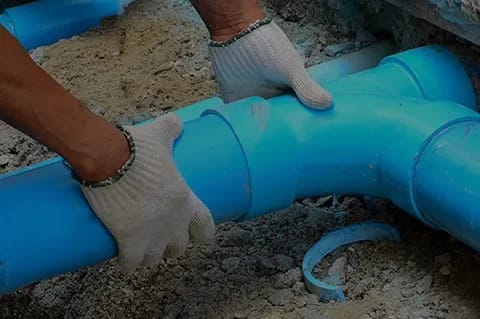
No homeowner in Redmond, WA wants to hear that their sewer line needs to be replaced. It is one of those projects that sits completely out of sight until something goes wrong, and by that point the options are narrower and the costs are higher than they would have been a year earlier.
But sewer line replacement is not always the first answer. Sometimes a repair is enough. The challenge is knowing where that line falls for your specific pipe, your specific damage, and your specific property.
Redmond homeowners are responsible for the lateral sewer pipe that connects their home to the city’s main line. According to the City of Redmond, wastewater enters the public main through a smaller pipe known as a side sewer that crosses your property, and you are responsible for maintaining that lateral from your home all the way to the connection. When that pipe fails, the repair or replacement falls on you, not the city.
This guide walks through how to determine whether your sewer line has reached the point where replacement is the practical choice, what the warning signs look like at each stage, and what the process involves once you commit to it.
If you have been dealing with recurring backups or suspect your pipe is deteriorating, this is where to start.
In this article, you will learn about:
- Your pipe material tells you more than its age does
- When repair still makes sense, and when it stops
- The signs that point straight to replacement
- How sewer line replacement actually works in Redmond
- What this costs and how to plan for it
Keep reading to understand the decision clearly so you can avoid both unnecessary replacement and the far more expensive mistake of waiting too long.
Your pipe material tells you more than its age does
The single biggest factor in whether your sewer line will need replacement is the material it is made from. Age matters, but two pipes installed in the same year can be in completely different condition depending on what they are built from and what they have been exposed to. Knowing your pipe material gives you a realistic picture of where your line stands.
Clay, cast iron, and Orangeburg, the pipes most Redmond homes were built with
If your Redmond home was built before the early 1980s, your sewer lateral is most likely clay, cast iron, or in some cases Orangeburg. Each of these materials was standard for its era, and each has a predictable failure pattern.
Clay pipes were widely used from the early 1900s through the 1960s. They resist the chemical action of wastewater well, but they are brittle and installed in short sections joined by mortar. Over decades, soil movement separates those joints, and tree roots exploit the gaps. The expected lifespan of clay sewer pipe is roughly 50 to 60 years under typical conditions, meaning many clay lines in the Redmond area are already past their design life.
Cast iron pipes were common in homes built from the mid-century through the 1970s. They are strong, but they corrode from the inside as wastewater and moisture break down the metal over time. The generally accepted lifespan for cast iron is 50 to 75 years, though many fail closer to the 50-year mark once internal rust narrows the pipe and weakens the walls.
Orangeburg pipe, made from layers of wood pulp sealed with coal tar, was installed primarily between the 1940s and 1970s. It has the shortest practical lifespan of any residential sewer material, often deteriorating and collapsing well before the 50-year mark. If your home has Orangeburg, replacement is almost always a matter of when, not if.
Why PVC changed everything
PVC pipe became the standard for residential sewer lines in the 1980s and remains the material of choice today. It resists corrosion, does not attract roots in the same way that cracked clay and rusted iron do, and has an expected service life of 80 to 100 years or more under normal conditions.
If your home was built after the early 1980s and the original plumbing has not been modified, there is a good chance your sewer lateral is PVC. That does not make it immune to damage (poor installation, ground movement, and heavy loads above the line can still cause problems), but it does mean replacement is far less likely to be on your near-term horizon. A periodic camera inspection can confirm the material and condition without any digging.
The age of the house is your first clue
You do not need a sewer scope to start assessing your risk. The year your home was built tells you a great deal about what is underground. As a general guide:
- Pre-1960s: almost certainly clay, possibly with some original Orangeburg sections. High risk for joint failure, root intrusion, and material breakdown.
- 1960s through early 1980s: likely cast iron, possibly clay or Orangeburg. Moderate to high risk depending on soil conditions and maintenance history.
- Mid-1980s onward: likely PVC or ABS. Lower risk, but not zero.
The American Society of Civil Engineers gave wastewater infrastructure a D+ grade in its 2025 Report Card, noting that the average number of collection system failures for combined water utilities increased from 2 to 3.3 per 100 miles of pipe over the last decade. That trend reflects the same aging-pipe reality that affects private residential lines, including those in Redmond neighborhoods built during the same era.
When repair still makes sense, and when it stops
Replacement is not the default answer for every sewer problem. In many cases, a well-targeted repair extends the working life of a line for years. The question is whether the repair addresses the actual condition of the pipe or just buys a few months before the next failure.
A single crack in an otherwise solid line
If a camera inspection reveals one damaged section in a pipe that is otherwise structurally sound, repair is usually the better call. A localized crack, a separated joint, or a short section of minor root intrusion can often be addressed with a spot repair or a short section of sewer lining that seals the defect without replacing the entire line.
The key distinction is whether the rest of the pipe shows signs of the same deterioration. A single point of failure in an aging cast iron line might indicate that the whole pipe is thinning, in which case repairing one spot only delays the next failure by months. But a single crack caused by a specific event, like heavy equipment driven over the line during a neighboring construction project, is a different situation entirely.
Root clearing works, until it stops working
Drain cleaning and root cutting are effective maintenance tools. Snaking or hydro jetting can clear root masses and restore flow, and many homeowners go years with periodic cleanings that keep the line functional. The problem comes when the intervals between cleanings start shrinking.
If you went from cleaning the line every two years to every year to every six months, the roots are not the real issue. The pipe is. Roots only enter through openings, and if those openings are getting worse, the pipe is deteriorating around them. At some point, the cumulative cost of repeated cleanings exceeds the cost of a replacement, and the pipe has become too compromised for cleaning alone to be a reliable strategy.
The tipping point most homeowners miss
The transition from repairable to replaceable usually is not a single dramatic event. It is a pattern. Here is what that pattern typically looks like:
- An occasional slow drain or minor backup, resolved with a simple cleaning.
- The same problem returns faster each time, requiring more aggressive methods.
- A camera inspection shows damage in multiple locations, not just one.
- The pipe material is visibly degraded, with thinning walls, widespread cracking, or deformation.
- The next cleaning produces results that last weeks instead of months.
Once you are at stages three through five, repair is no longer solving the underlying problem. At that point, replacement becomes the more cost-effective path because it eliminates the cycle entirely and gives you a new line with decades of service ahead of it.
The signs that point straight to replacement
Some conditions make the decision straightforward. When the pipe has reached a certain level of failure, repair options either will not hold or will cost nearly as much as a new line without delivering the same result.
Backups that keep coming back no matter what you do
A single backup can happen to anyone. A recurring backup that returns within weeks or months of professional cleaning is a different story. It means something structural inside the pipe is catching waste, whether that is a collapsed section, a severe belly, or root masses that regrow because the pipe can no longer keep them out.
The City of Redmond’s wastewater FAQ notes that the majority of sewer backups result from blockages in the lateral connecting the home to the city main. When those blockages become chronic despite professional attention, the lateral itself has reached the end of its functional life.
Camera footage that shows damage along the whole line
A sewer camera inspection is the diagnostic that removes all guesswork. When the footage shows isolated damage in one spot, repair is on the table. When it shows cracking, corrosion, root penetration, or deformation at multiple points along the length of the pipe, the math changes.
Widespread damage means the entire pipe is in the same stage of deterioration. Fixing one section just shifts the point of failure to the next weakest spot. In these situations, a full replacement, whether through trenchless methods or traditional excavation, delivers a solution that does not require a follow-up repair six months later. If your inspection reveals a pattern of cracked pipe and root intrusion at multiple points, that pattern is the answer.
When the ground above the pipe starts sinking
Visible changes at the surface are late-stage symptoms. Depressions in the yard, soggy spots that do not dry, sections of a driveway or walkway that have cracked or settled unevenly, these all indicate that the pipe below has been leaking long enough to erode the surrounding soil and create underground voids.
By the time the ground shifts visibly, the pipe has typically lost its structural integrity. A line that has collapsed or separated to the point of allowing soil infiltration cannot be reliably repaired with a liner because the liner needs a reasonably intact pipe to adhere to. These situations almost always require replacement, and the sooner it happens, the less additional damage the surrounding soil, foundation elements, and hardscaping will sustain.
How sewer line replacement actually works in Redmond
Understanding the process takes some of the uncertainty out of a project that most homeowners have never dealt with before. Redmond has specific requirements for side sewer work, and knowing what to expect makes the timeline and the decision-making easier.
Permits, inspections, and the city’s role
Sewer line replacement in Redmond requires a side sewer permit from the city’s Development Engineering division. Contractors performing the work must be active on the City of Redmond’s Approved Side Sewer Contractor Roster, and the completed installation must pass a city inspection and pressure test before the trench can be backfilled.
The city’s role is regulatory, not financial. Redmond maintains the public sewer mains and lift stations, but the side sewer from your home to the main connection is your responsibility. That includes the portion of the pipe that runs under the public right-of-way between your property line and the main. The permit process ensures the new line meets current standards (gasketed PVC, minimum slope, proper cleanout placement), and the inspection confirms the work was done correctly.
Trenchless replacement vs. traditional excavation
There are two primary approaches to replacing a sewer line, and the right choice depends on the condition of the existing pipe and the layout of your property.
Pipe bursting is a trenchless method that breaks apart the old pipe from inside while simultaneously pulling a new HDPE pipe into position. It requires only small access points at each end of the line rather than a continuous open trench. This approach works well when the existing pipe has maintained enough of its shape to guide the bursting head through, and it preserves landscaping, driveways, and other surfaces above the line.
Traditional excavation involves digging a trench along the path of the old pipe, removing it, and installing the new line in its place. It is sometimes necessary when the pipe has collapsed severely, when the line runs under structures that limit access for trenchless equipment, or when the depth or angle of the pipe makes trenchless methods impractical.
A closer look at the different repair and replacement options can help you understand which approach fits your situation. In most cases, your technician will recommend the method based on what the camera inspection reveals about the pipe’s condition and the site layout.
What to expect from start to finish
The typical Redmond sewer line replacement follows a predictable sequence:
- A camera inspection confirms the condition of the pipe and identifies the scope of replacement needed.
- The contractor pulls a side sewer permit from the City of Redmond and schedules the work.
- On the day of the job, the crew accesses the line through excavation points or, in the case of trenchless work, through small entry and exit pits.
- The old pipe is removed or displaced and the new pipe is installed.
- A city inspector examines the completed work and witnesses a pressure test before the trench is backfilled.
- The site is restored, including any disturbed landscaping or surfaces.
Most residential sewer line replacements in Redmond can be completed in one to three days depending on the method, the length of the line, and the complexity of the site. Trenchless pipe bursting projects tend to fall on the shorter end of that range because they involve less surface disruption and less backfill work.
What this costs and how to plan for it
Sewer line replacement is a significant expense, and there is no single number that applies to every project. But understanding the cost drivers helps you evaluate quotes, set realistic expectations, and make a confident decision.
The price range depends on the method and the damage
The cost of a sewer line replacement in Redmond varies based on several factors:
- The length of the line from the house to the main connection
- The depth of the pipe and the type of soil
- The replacement method (trenchless vs. excavation)
- Whether any surfaces above the line (driveway, sidewalk, landscaping) need to be restored
- Whether the line runs under obstacles that complicate access
Trenchless methods generally reduce the total project cost because they eliminate or minimize surface restoration work. A driveway that does not need to be torn up and repoured represents a meaningful savings. However, trenchless is not always an option, and a severely collapsed or misrouted pipe may require excavation regardless of the cost difference.
Rather than focusing on a specific dollar figure (which varies too much by property to be useful), ask any contractor for a detailed written estimate that breaks out the replacement work, the permit fees, the inspection, and any surface restoration so you can compare proposals clearly.
Why waiting always costs more
The most expensive sewer line replacement is the one that happens as an emergency. When a line fails completely and sewage is backing into the home or surfacing in the yard, you lose the ability to plan, compare, and schedule on your terms. Emergency work costs more because it requires immediate mobilization, and the damage to your home’s interior, foundation, or landscaping adds costs that would not exist if the replacement had happened before the failure.
The ASCE’s 2025 Infrastructure Report Card found that only about 30 percent of the nation’s total wastewater infrastructure capital needs are currently being met, and that the sector’s renewal and replacement rate for large capital projects has actually decreased over the last decade. That same pattern of deferred maintenance plays out at the residential level. The homeowner who waits until the pipe collapses pays for both the replacement and the damage that the collapse caused. The homeowner who replaces a deteriorating line on a planned timeline pays for the pipe and nothing else.
A proactive sewer line diagnostic gives you the information you need to make the call on your terms, with time to evaluate options, get competitive estimates, and schedule the work around your life rather than around an emergency.
Conclusion
Sewer line replacement is not a decision you have to make blindly. The condition of your pipe, the material it is made from, the pattern of problems you have been experiencing, and the footage from a camera inspection all point toward a clear answer. Sometimes that answer is a targeted repair. Sometimes it is a full replacement. The worst outcome is not knowing which one you need and defaulting to repeated patching on a pipe that has already given you every signal that it is done.
Redmond homeowners who understand their pipe material, recognize the signs of systemic failure, and act before the line collapses have more options, lower costs, and far less disruption than those who wait for the emergency to arrive. The first step is always the same: find out what is actually happening inside the line.
If your Redmond home has older pipes, a history of backups, or symptoms you have been working around, a camera inspection from Pro Sewer Repair can give you a definitive answer. From there, their team can walk you through the repair or replacement options that fit your property and your budget, with honest recommendations based on what the footage actually shows.