

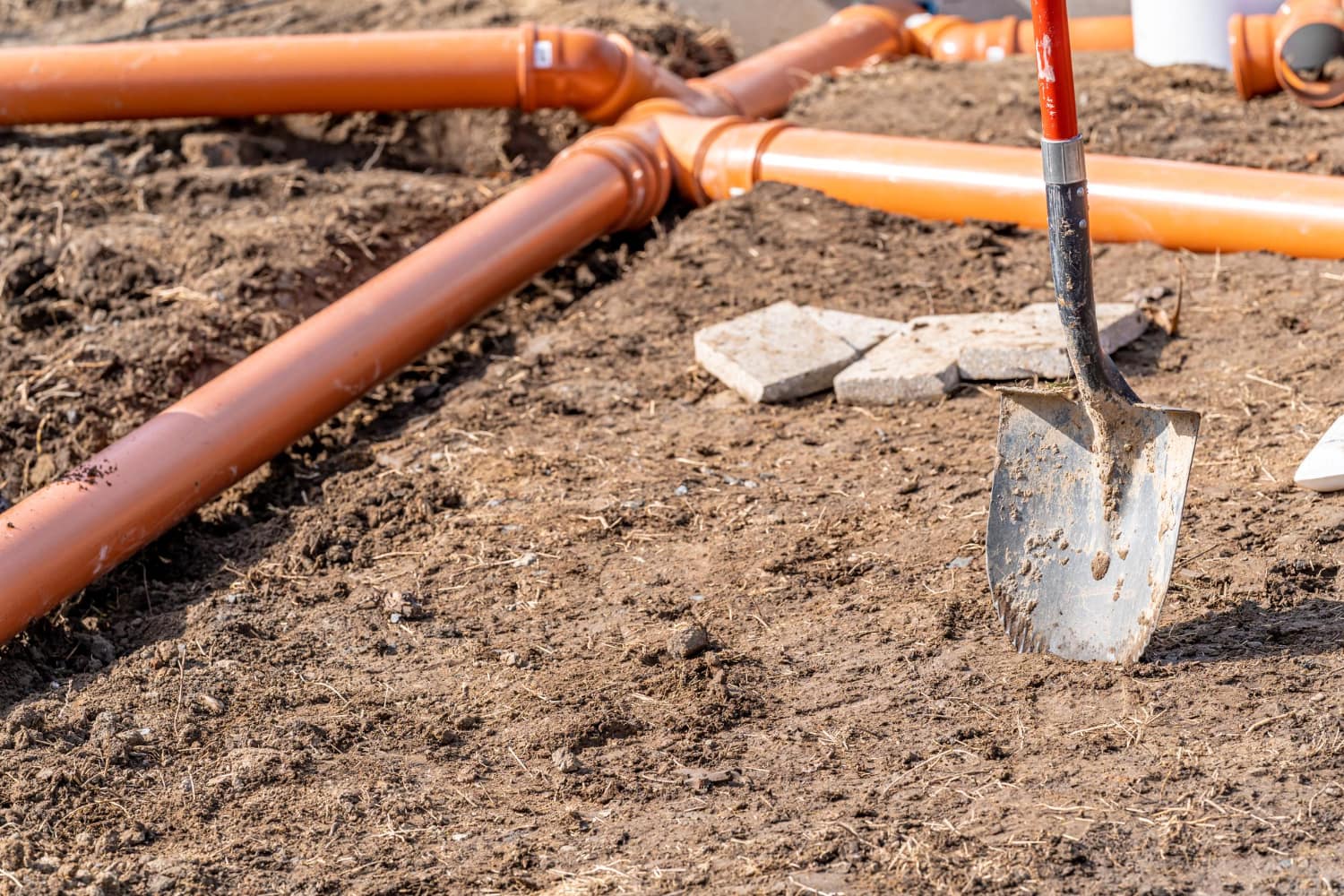
Collapsed sewer line repair is one of the most urgent plumbing jobs a homeowner can face, because nothing moves through your pipes until the break is fixed. The good news is that modern repair methods give you real options, from trenchless fixes that leave your yard untouched to full replacements engineered to last half a century.
A collapsed sewer line can bring your home’s plumbing system to a complete stop. When the pipe that carries waste away from your house fails, you face serious problems like sewage backups, foul smells, and potential property damage. Understanding how to identify and fix a collapsed sewer line helps you act fast and avoid expensive complications.
The good news is that modern repair methods can often fix collapsed sewer lines without digging up your entire yard. Technology like trenchless repair allows plumbers to restore or replace damaged pipes through small access points. This saves time, protects your landscaping, and costs less than traditional methods.
This guide walks you through what causes sewer lines to collapse, how to spot the warning signs, and what repair options work best for your situation. You’ll learn how professionals diagnose the problem and which solutions make sense for different types of damage. Getting your sewer line repaired quickly prevents further harm to your home and keeps repair costs down.
Here’s what you’ll find inside:
- Factors leading to sewer line collapse
- Key indicators of sewer line failure
- Assessment strategies and diagnostic tools
- Modern and traditional repair methods
- Selecting sustainable solutions
Keep reading to learn how to spot a collapse early, choose the right repair method for your property, and avoid the emergency that comes from waiting too long.
Factors leading to sewer line collapse
Sewer lines fail when their structural integrity becomes compromised beyond the point of safe operation. The most common causes involve material breakdown from age, external pressure from soil movement, and physical damage from tree roots penetrating the pipe walls.
Aging pipes and material deterioration
Older sewer pipes break down over time due to constant exposure to wastewater and corrosive materials. Cast iron pipes, common in homes built before the 1970s, corrode from the inside out as hydrogen sulfide gas converts to sulfuric acid. According to the U.S. Environmental Protection Agency, microbial conversion of hydrogen sulfide into sulfuric acid on pipe surfaces is a major driver of concrete and metal deterioration in wastewater systems and can dramatically shorten pipe service life if left unchecked.
Clay pipes, another older material, become brittle with age and develop cracks that spread until sections break apart completely. Even newer PVC pipes degrade when exposed to certain chemicals or extreme temperature changes, though this happens much more slowly than with metal or clay.
The timeline for material failure varies based on pipe composition and environmental conditions. Cast iron typically lasts 50 to 75 years, while clay pipes may function for 50 to 60 years before failure becomes likely.
Ground shifting and soil pressure
Your soil exerts constant pressure on buried sewer lines, and any ground movement increases stress on the pipes. Settlement occurs when soil compacts unevenly, creating pressure points that bend or crack the pipe. According to the U.S. Geological Survey, most states are at some risk from earthquake shaking, with the West Coast, Alaska, and Hawaii facing the highest hazard levels, and ground motion from seismic events can stress or damage buried utilities including sewer pipes.
Freezing and thawing cycles expand and contract the ground, pushing against pipes from different angles throughout the year. This repeated stress weakens joints and creates separations where pipe sections connect.
Heavy clay soils place more weight on pipes than sandy soils, making collapse more likely in certain areas. Water saturation adds significant weight to soil, increasing downward pressure during heavy rains or flooding. Vehicle traffic and construction equipment operating above shallow sewer lines can compress soil enough to crush older or weakened pipes.
Tree root intrusion weakening pipe structure
Tree roots grow toward sewer lines because they release water vapor that attracts roots searching for moisture. According to the U.S. Environmental Protection Agency, homeowners should keep trees and woody plants away from wastewater system components because roots naturally grow toward the moisture and nutrients inside pipes and can infiltrate buried lines through small openings. This expansion widens existing damage and creates new fractures in the pipe walls.
Roots form dense mats inside pipes that trap debris and create blockages. The continuing root growth applies steady outward pressure that eventually breaks the pipe apart from within.
Fast-growing trees like willows, poplars, and maples pose the highest risk because their aggressive root systems spread widely and grow rapidly. Even smaller ornamental trees can damage pipes if planted within 10 feet of your sewer line. Root intrusion happens most often in older clay or cast iron pipes with existing joints or cracks that provide entry points.
Key indicators of sewer line failure
A collapsed sewer line shows specific warning signs that appear in your home and yard. These problems get worse over time and can cause major damage if you ignore them.
Frequent sewage backups and slow drains
When your sewer line collapses, wastewater cannot flow properly through the damaged section. You will notice that multiple drains in your home slow down at the same time. This happens because the blockage affects your entire plumbing system, not just one fixture.
Sewage backups often start in the lowest drains first. Your basement toilet or floor drain will show problems before upstairs fixtures do. Water may gurgle or rise in your toilet when you run the washing machine or flush other toilets.
These backups occur because the collapsed section blocks the normal path of wastewater. The sewage has nowhere to go except back into your home through the lowest available opening.
Common signs include:
- Water backing up in your shower or bathtub
- Toilets that overflow when you use other plumbing fixtures
- Multiple drains running slowly throughout your house
- Gurgling sounds coming from drains
Unusual wet spots or sinkholes in the yard
A broken sewer line leaks wastewater directly into the soil around your pipes. This creates patches of ground that stay wet even during dry weather. The grass in these areas often looks greener and grows faster than the rest of your yard because sewage acts as fertilizer.
Sinkholes form when the leaking water washes away soil beneath the surface. The ground above the void eventually collapses, creating a depression in your yard. These holes can range from small dips to large craters depending on how long the leak has gone unnoticed.
You might also notice cracks in your driveway, sidewalk, or foundation. The shifting soil caused by water damage can affect nearby structures.
Persistent foul odors inside or outside the home
Sewer gas escapes through cracks and breaks in your collapsed pipe. This gas smells like rotten eggs and can fill your home or yard with an unpleasant odor. The smell gets stronger near the damaged section of pipe.
Inside your home, you might notice the odor near drains, in your basement, or coming from walls where pipes run. Outside, the smell concentrates around wet spots in your yard or near your sewer cleanout access point.
These odors do not go away with normal cleaning or air fresheners. The smell persists because raw sewage continues to leak from the broken pipe. According to the U.S. Occupational Safety and Health Administration, hydrogen sulfide at low concentrations produces a strong rotten-egg odor and irritates the eyes, nose, and throat, while moderate exposure can cause headaches, nausea, and breathing difficulty, and higher concentrations can quickly become life-threatening.
Assessment strategies and diagnostic tools
Professional diagnosis relies on camera technology to pinpoint damage locations and determine whether partial repairs or full replacement will solve the problem.
Sewer camera inspections to locate damage
A sewer camera inspection uses a waterproof video camera attached to a flexible cable that travels through your entire sewer line. The camera sends live footage to a monitor above ground, letting plumbers see cracks, blockages, root intrusion, and collapsed sections in real time.
Modern cameras include LED lights and can rotate 360 degrees to capture every angle of the pipe’s interior. The plumber marks specific problem areas with distance measurements from the access point, which helps pinpoint exactly where excavation or repair is needed.
Most inspections take 30 to 60 minutes to complete. You’ll receive a recording or report showing the condition of your pipes with timestamps and location markers. This visual evidence helps you understand the severity of damage and makes it easier to plan repairs.
Identifying the extent of pipe collapse
The camera inspection reveals whether you have a partial collapse where only one section of pipe has failed or a complete collapse where the entire structure has given way. Partial collapses often show sagging or cracking with some open space remaining for water flow.
Complete collapses show pipe segments that have separated, crushed inward, or dropped entirely. The inspection also shows how many feet of pipe are affected. A collapse spanning 3 to 5 feet requires different solutions than damage extending 20 feet or more.
Plumbers also check surrounding pipe sections for early warning signs like hairline cracks, joint separation, or material deterioration. These areas may fail soon even if they haven’t collapsed yet.
Evaluating repair versus replacement needs
Your plumber weighs several factors to recommend repair or replacement. Pipe material and age matter because older clay or cast iron pipes often have multiple weak points that will fail even after fixing one section.
Extent of damage determines feasibility—localized collapses under 5 feet often qualify for spot repairs while widespread deterioration requires full replacement. Root intrusion severity affects the decision since roots will return unless you replace the pipe with root-resistant materials.
Soil conditions and depth of the line impact installation difficulty and cost. Shallow lines in stable soil cost less to replace than deep pipes in rocky or waterlogged ground. Your budget and how long you plan to stay in your home also influence whether a temporary fix or permanent solution makes sense.
Modern and traditional repair methods
Homeowners facing a collapsed sewer line have access to several proven repair approaches that range from minimally invasive techniques to complete pipe replacement. The method you choose depends on the extent of your pipe damage, soil conditions, and budget constraints.
Trenchless pipe lining for partial collapses
Trenchless pipe lining works best when your sewer line has partially collapsed but still maintains some structural shape. This method involves inserting a flexible liner coated with epoxy resin into your damaged pipe through small access points.
The liner gets positioned inside your existing pipe and inflated until it presses against the walls. Once the epoxy cures, it forms a new pipe within the old one. This creates a smooth, jointless surface that can last 50 years or more.
Benefits of pipe lining:
- Minimal digging required
- Completed in one to two days
- Preserves your landscaping and hardscaping
- Costs 30-50% less than traditional excavation
This trenchless sewer line replacement option only works if your pipe retains enough structure to hold the liner. Your pipe also needs to be relatively round and free from major offset joints.
Pipe bursting for full replacement
Pipe bursting replaces your entire collapsed sewer line without digging a trench along its full length. A bursting head gets pulled through your old pipe, breaking it apart while simultaneously pulling new pipe into place behind it.
This method requires two access points: one where the new pipe enters and one where the bursting head exits. The bursting head fractures your old pipe and pushes the fragments into the surrounding soil.
You can often upgrade to a larger pipe diameter during this process. The new pipe is typically high-density polyethylene (HDPE), which resists root intrusion and corrosion better than older materials.
Pipe bursting handles completely collapsed sections that pipe lining cannot fix. It provides a brand new pipe while avoiding the extensive digging associated with traditional excavation methods.
Traditional excavation for severe damage
Traditional excavation involves digging a trench to expose your entire damaged sewer line for repair or replacement. This broken sewer pipe repair method remains necessary when your pipe has collapsed in multiple locations or shows severe structural failure.
Contractors use excavation equipment to dig down to your sewer line depth, which typically ranges from 2 to 6 feet underground. They remove the damaged sections and install new pipe, then backfill the trench.
When excavation is required:
- Multiple collapse points throughout the line
- Severe pipe misalignment or bellied sections
- Unknown pipe material or condition
- Need to relocate the sewer line path
Excavation costs more and takes longer than trenchless methods. You’ll also need to repair your yard, driveway, or other affected surfaces afterward. However, this approach gives contractors complete visual access to assess and fix all sewer pipe damage solutions thoroughly.
The method provides a permanent fix and allows your contractor to inspect soil conditions and address any drainage issues contributing to the collapse.
Selecting sustainable solutions
Modern repair methods balance immediate fixes with long-term environmental responsibility and property preservation. The right choice depends on your budget, pipe condition, and how quickly you need the work completed.
Comparing cost, durability, and disruption
Trenchless sewer repair typically costs between $80 and $250 per foot, while traditional excavation runs $50 to $200 per foot. These numbers don’t tell the whole story though. Traditional digging adds expenses for landscape restoration, driveway replacement, and longer labor hours.
Trenchless methods like CIPP lining create a new pipe inside your old one without destroying your yard. The repairs last 50 years or more and finish in one or two days. Traditional excavation can take a week and leaves your property torn up for even longer.
Method comparison by factor:
- Yard damage: minimal with trenchless, extensive with traditional
- Completion time: 1-2 days trenchless, 5-7 days traditional
- Lifespan: 50+ years for both methods
- Restoration needed: none to minimal with trenchless, significant with traditional
Your property layout matters when choosing a method. Trenchless works well when pipes run under driveways, mature trees, or finished landscapes. Deep pipes or complete collapses sometimes require traditional excavation regardless of cost.
When emergency repair is necessary
Emergency sewer repair services respond to sewage backups, flooding basements, and health hazards that can’t wait. You need immediate help when raw sewage enters your home or multiple drains stop working at once.
Emergency repairs cost more than scheduled work. Expect to pay 1.5 to 3 times the standard rate for after-hours service. Most professionals offer temporary fixes to stop immediate damage, then return for permanent solutions.
Call emergency services if you notice sewage odors indoors, water pooling in your basement, or toilets that won’t flush across your home. These signs indicate serious line failure that threatens your health and property.
Preventative steps to avoid future collapse
Regular camera inspections every 3 to 5 years catch small problems before pipes fail completely. Your plumber sends a camera through your line to spot cracks, root intrusion, and corrosion early.
Avoid flushing grease, paper products, and harsh chemicals that damage pipes over time. Tree roots seek out moisture in sewer lines, so keep fast-growing species like willows and poplars at least 10 feet from your pipes.
Schedule professional drain cleaning every 18 to 24 months to remove buildup that weakens pipe walls. Ask your plumber about enzyme treatments that break down organic matter without corroding your pipes. Keep records of your sewer line’s age and material so you can plan replacements before emergency failures occur.
Conclusion
A collapsed sewer line needs quick action to prevent further damage to your home and property. You now understand the warning signs to watch for, from slow drains to sewage odors in your yard.
The repair method you choose depends on several factors. Your pipe’s condition, soil type, and budget all play a role in the decision. Traditional excavation works for severe cases, while trenchless methods like pipe lining or pipe bursting offer less invasive options.
Modern trenchless technology has changed how plumbers fix collapsed pipes. You can often avoid tearing up your entire yard or driveway. These methods cost less and take less time than traditional digging in many cases.
Don’t try to fix a collapsed sewer line yourself. This job requires professional equipment and expertise. A licensed plumber can assess the damage accurately and recommend the best solution for your specific situation.
The right repair method will restore your sewer system’s function and protect your property value. Take time to research your options and choose a qualified contractor with experience in collapsed pipe repair.
For a professional diagnosis and an honest repair plan backed by decades of local experience, contact Pro Sewer Repair and get your sewer line flowing again before the damage spreads further.