

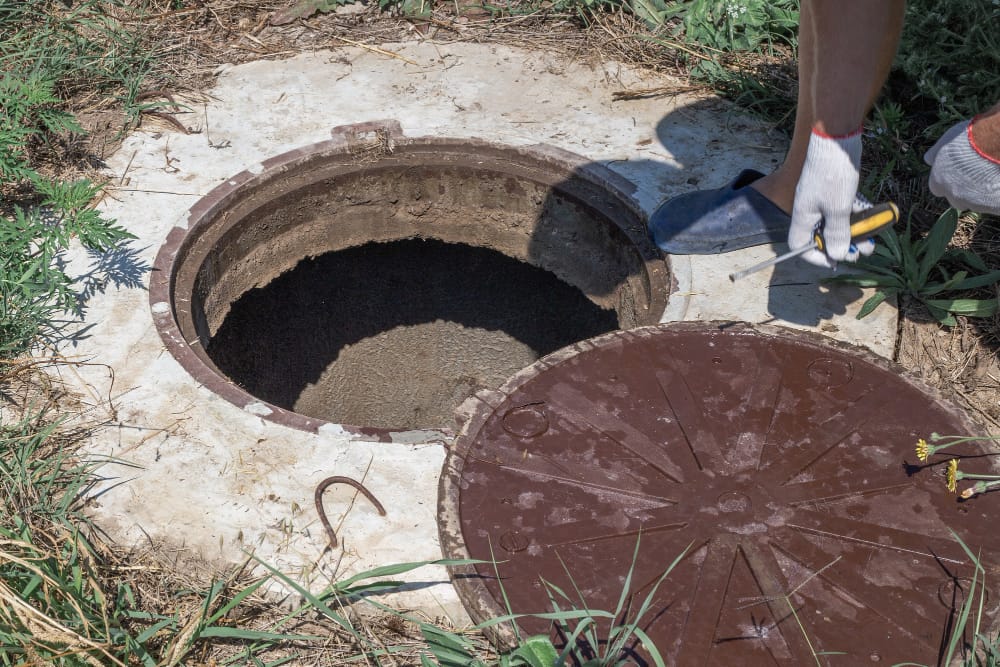
You called a professional, had the drain cleaned, and the sewer smell disappeared. For a few days, maybe a few weeks, the house smelled normal again. Then the odor crept back, the same rotten-egg smell drifting up from a floor drain, a bathroom, or out in the yard, as if the cleaning never happened. If this cycle sounds familiar, you are not dealing with a clog problem. You are dealing with a pipe problem that drain cleaning was never designed to fix.
Recurring sewer odors after drain cleaning in Mountlake Terrace, WA are one of the clearest signals that something structural is wrong with the sewer line. The cleaning restored flow by removing the blockage, but the smell is not caused by a blockage. It is caused by sewer gas escaping through a defect in the pipe, a crack, a separated joint, a missing seal, or a section of pipe that has deteriorated enough to let gas seep into the soil around your home and up through the foundation.
Mountlake Terrace incorporated in 1954 specifically to provide sanitary sewer connections to a growing number of homes, and the sewer system that serves it today dates back to the late 1950s. According to the City of Mountlake Terrace Sewer Division, the city maintains approximately 69 miles of sewer main lines and 5,500 sewer connection laterals. The private side sewers connecting those homes to the mains are the homeowner’s responsibility, and many of them are original to the houses they serve, putting them well past the expected lifespan of the materials they were built with.
In this article, you will learn about:
- What’s actually causing the smell, and why cleaning didn’t fix it
- The most common reasons sewer odors come back in Mountlake Terrace homes
- How to tell whether the odor is a simple fix or a pipe problem
- The diagnostic that ends the guessing
- Permanent solutions that stop sewer odors for good
Keep reading to understand why the smell keeps returning and what it takes to eliminate it at the source, not just mask it with another cleaning.
What’s actually causing the smell, and why cleaning didn’t fix it
Sewer odor inside or around a home is not a plumbing inconvenience. It is sewer gas escaping from the pipe system into spaces where people live and breathe. Understanding what sewer gas is and how it gets out of the pipe explains why drain cleaning only stops the smell temporarily.
Sewer gas and the pipe defects that let it escape
A properly sealed sewer line is a closed system. Wastewater flows through the pipe, gas generated by decomposing waste stays contained within the line, and P-traps at every fixture create a water seal that prevents gas from traveling backward into the home. When the system is intact, you should never smell anything.
Sewer odor appears when that closed system is compromised. A crack in the pipe lets gas escape into the surrounding soil, where it migrates upward through the foundation or through gaps around utility penetrations. A separated joint does the same thing. A corroded section of cast iron with pinhole leaks releases both moisture and gas into the ground around it. In every case, the pipe has an opening it should not have, and gas is finding its way through it.
Drain cleaning addresses what is inside the pipe, buildup, roots, debris, but it does not seal the defects in the pipe wall or the joints between sections. Once the blockage is gone and flow is restored, the underlying cracks and openings are still there, and gas continues to escape through them.
What hydrogen sulfide is and why you should not ignore it
The characteristic rotten-egg smell of sewer gas comes primarily from hydrogen sulfide, a colorless, flammable gas produced by the bacterial breakdown of organic waste.
According to the Agency for Toxic Substances and Disease Registry (ATSDR), a division of the CDC, hydrogen sulfide is detectable by smell at very low concentrations, between 0.0005 and 0.3 parts per million. At higher concentrations, a person can lose the ability to smell it entirely, which increases the risk of continued exposure without awareness.
The ATSDR notes that household exposure to hydrogen sulfide can occur through sewer systems and that the gas is associated with municipal sewers and sewage treatment processes. At the low concentrations typically found in residential settings, symptoms can include headaches, eye irritation, and fatigue.
The concern is not acute toxicity at those levels, but chronic, low-grade exposure in a space where you spend hours every day.
A sewer smell that keeps coming back is not something to adapt to. It is a signal that gas is entering your living space through a path that should not exist.
Drain cleaning removes blockages, not entry points
Professional drain cleaning clears the material inside the pipe that is restricting flow. Hydro jetting scours the pipe walls. Mechanical snaking breaks through root masses and solid obstructions. Both methods restore drainage and can temporarily reduce odor by removing the decomposing material that was generating the gas in the first place.
But the structural defect that allowed roots to enter, that allowed soil to infiltrate, or that gave gas a direct escape route out of the pipe, that defect remains after the cleaning is over. The odor diminishes for a while because the source material is gone.
It returns once new waste begins to decompose in the same compromised section of pipe, or once the gas that was being temporarily contained by the restored water flow finds its way out through the same cracks and separations that were there before.
The most common reasons sewer odors come back in Mountlake Terrace homes
Mountlake Terrace’s housing stock is almost entirely mid-century and later, with the heaviest development occurring in the late 1950s through the 1970s. The sewer laterals installed beneath these homes are now 50 to 70 years old, and the odor problems they produce follow a few predictable patterns.
Cracked pipes and separated joints in mid-century sewer lines
Homes built during Mountlake Terrace’s early development typically have concrete or cast iron sewer laterals. Concrete pipes develop cracks as the material degrades internally from decades of acidic wastewater exposure. Cast iron lines corrode from inside, thinning the walls until pinhole leaks and fractures develop. In both materials, the joints between pipe sections loosen as soil settles and shifts over time.
Each of these defects is a gas escape route. A cracked pipe section releases sewer gas into the soil around it. A separated joint does the same, and it also lets groundwater and soil enter the pipe, creating the conditions for future blockages. Drain cleaning clears the consequences of these defects, but the defects themselves remain open and active.
Dry P-traps in fixtures you rarely use
Not every sewer odor traces back to a broken pipe. The simplest cause of sewer smell in a home is a dry P-trap, the U-shaped section of pipe beneath every sink, tub, shower, and floor drain that holds a small amount of water to block sewer gas from entering the room. When a fixture goes unused for weeks or months, the water in the trap evaporates, and sewer gas flows freely up through the open drain.
This is especially common in guest bathrooms, basement floor drains, laundry sinks, and seasonal fixtures that do not see daily use. The fix is straightforward: run water in every fixture periodically (every few weeks is enough) to keep the traps full. If the odor disappears after running the water and does not return, the dry trap was the issue. If it comes back despite full traps, the problem is deeper.
A damaged or missing cleanout cap
The sewer cleanout is a capped access point on the sewer line, typically located near the foundation or in the yard, that allows professionals to access the pipe for cleaning and inspection. If the cap is cracked, missing, or not seated properly, it becomes a direct vent for sewer gas into the air around the house.
This is an easy item to overlook because most homeowners rarely look at their cleanout. After a drain cleaning, the technician may have removed the cap for access and not fully reseated it, or the cap itself may have been damaged during the service. A quick visual check of the cleanout after any cleaning is a simple step that eliminates one of the most common sources of outdoor sewer odor.
Root intrusion that reopens after every clearing
Roots enter sewer pipes through cracks and joint gaps, and root clearing removes the root mass but not the opening it came through. Within months, new root growth re-enters the same point, and the cycle begins again. Each round of intrusion widens the opening slightly, which means each round lets more gas escape into the surrounding soil.
Homeowners who have roots cleared regularly and still notice sewer odors between cleanings are seeing this exact pattern. The roots are a symptom of the pipe defect, not the cause of the odor. The gas escapes through the same crack the roots use, and clearing the roots does not close the crack.
How to tell whether the odor is a simple fix or a pipe problem
The location, timing, and pattern of the sewer smell tell you a great deal about what is causing it. Before scheduling another cleaning, use these observations to narrow down the source.
One fixture vs. the whole house
If the smell is isolated to a single fixture (one bathroom, one floor drain), start with the simplest explanations. Run water to refill the P-trap. Check for a loose or missing cleanout cap nearby. Inspect the wax ring seal at the base of a toilet if the odor is in a bathroom. These are fixture-level issues that do not require pipe work to resolve.
If the odor is present in multiple areas of the home, or if it is strongest in the basement or crawl space, the source is more likely in the main sewer line. Gas escaping from a cracked pipe underground migrates through soil and enters the home through the path of least resistance, which is usually the foundation, utility penetrations, or the lowest point in the house.
Odor that appears in the yard, not just inside
Sewer smell outside the house, particularly near the sewer line path or around the cleanout, is a strong indicator of a pipe defect underground. Wastewater leaking from a cracked pipe saturates the surrounding soil with both moisture and gas, and the odor rises to the surface. If you notice a rotten-egg smell in a specific area of your yard, especially one that stays consistent regardless of weather or season, the pipe beneath that area is almost certainly compromised.
Outdoor odor combined with unusually green or soggy patches in the same area is an even stronger signal. The wastewater escaping from the pipe fertilizes the soil above it, and the moisture keeps the ground saturated. These visual and olfactory symptoms together are highly diagnostic.
The pattern after cleaning tells you everything
Track what happens after each cleaning. If the odor disappears for months and only returns gradually as buildup re-accumulates, you are likely dealing with a maintenance issue that periodic cleaning can manage (though you should still identify why buildup is recurring). If the odor returns within days or weeks of a thorough cleaning, the pipe itself is the problem. Cleaning removed the blockage and the decomposing material, but gas is still escaping through a structural defect that cleaning cannot address.
Shortening intervals between cleanings are another diagnostic signal. If each cleaning buys less time than the last, the pipe is deteriorating, and the defects that let gas escape are getting worse. At that point, another cleaning is not the answer. A camera inspection is.
The diagnostic that ends the guessing
When the odor pattern points to a pipe defect rather than a fixture-level issue, the next step is to see the inside of the pipe. Guessing at the cause wastes time and money. The right diagnostic confirms the source in a single visit.
Camera inspection after cleaning shows the real picture
A sewer camera inspection performed after the line has been cleaned gives the clearest view of the pipe’s condition. With the blockage removed and the walls scoured, the camera can see every crack, every separated joint, every corroded section, and every offset or belly that is trapping material and generating gas.
The footage identifies the exact location and nature of the defect that is allowing gas to escape. A hairline crack at one joint is a different repair than widespread corrosion along 20 feet of cast iron. A separated joint in otherwise solid concrete calls for a different approach than a pipe that has lost its shape entirely. The camera gives you the specific diagnosis, and the specific diagnosis drives the right repair.
For Mountlake Terrace homes with mid-century pipes, this inspection often reveals defects that have been developing for years but have only recently progressed to the point of producing noticeable odor. Catching them at this stage, before they escalate to a full backup or a collapsed section, keeps the repair scope smaller and the cost lower.
Smoke testing pinpoints where gas is escaping into the home
In some cases, the camera confirms the pipe defect but the path the gas takes into the home is not obvious. Smoke testing can help identify the entry points. A non-toxic smoke is introduced into the sewer line, and technicians observe where it surfaces, whether through a foundation crack, a dry trap, a failed seal around a toilet, or a gap in the ventilation system.
This technique is especially useful when the odor is intermittent or difficult to localize. It maps the path the gas is taking from the pipe defect to the living space, which ensures the repair addresses both the source (the pipe) and the delivery route (the building envelope).
Permanent solutions that stop sewer odors for good
Once the inspection confirms the defect and the gas path, the repair should eliminate the opening that lets gas escape. The goal is not another round of cleaning. It is a sealed, intact pipe system that contains gas the way it was designed to.
Lining seals the cracks that let gas through
Cured-in-place pipe lining is one of the most effective solutions for sewer odors caused by multiple cracks or joint separations in a pipe that has otherwise maintained its shape. The resin liner creates a seamless, jointless surface inside the existing pipe, sealing every crack and gap along its length. Once cured, there are no openings for gas to escape and no entry points for roots to exploit.
For Mountlake Terrace homes where the camera shows moderate deterioration across several joints, lining eliminates the odor source in a single procedure without excavation. It also extends the functional life of the pipe by decades, which means the investment solves the smell and defers a full replacement at the same time.
Targeted repairs for isolated defects
When the camera reveals a single defect, one cracked joint, one separated section, one corroded spot, and the rest of the pipe is sound, a targeted spot repair may be all that is needed. This could involve a short liner segment over the defect, an excavation-free repair from inside the pipe, or in some cases a small dig to access and replace the damaged section directly.
The key is confirming through the camera that the defect is truly isolated. If the surrounding pipe shows signs of the same deterioration, a spot repair will stop the current gas leak but will not prevent the next one from developing a few feet away. The footage makes this judgment call reliable.
When the odor points to a line that needs replacement
If the inspection reveals widespread damage, a pipe that has lost its structural shape, or corrosion so advanced that a liner cannot adhere properly, the odor is a symptom of a pipe that has reached the end of its life. In these cases, pipe bursting or trenchless replacement installs a new, seamless HDPE line that eliminates every crack, joint, and corrosion point in the old pipe.
Replacement is not the first recommendation for a sewer odor complaint, but it is the right one when the camera footage shows a pipe that cannot be reliably sealed by any other method. For Mountlake Terrace homes with original 1950s or 1960s concrete or cast iron laterals, the footage often tells a story that makes the decision straightforward: the pipe has served its purpose, and a new line is the only path to a permanent fix.
Conclusion
A sewer odor that returns after drain cleaning is not a cleaning problem. It is a pipe problem. The cleaning removed the blockage that was contributing to the smell, but the structural defect that allows gas to escape from the pipe, a crack, a separated joint, a corroded section, is still there. Until that defect is sealed, the odor will keep coming back no matter how many times the line is cleaned.
Mountlake Terrace homeowners living in mid-century homes with original sewer laterals are especially likely to encounter this pattern, because the pipe materials installed in the 1950s and 1960s are now well past their expected service life.
The combination of aging pipes, root-prone soil, and the region’s constant moisture creates exactly the conditions under which sewer gas finds its way out of the system and into the spaces around your home.
If you have had the drains cleaned and the sewer smell keeps returning, a camera inspection is the step that identifies the actual cause. Pro Sewer Repair serves Mountlake Terrace with sewer inspections, drain cleaning, trenchless lining, pipe bursting, and complete sewer line replacement. Reach out to schedule a diagnostic and find out what is behind the odor so it can be fixed once, not cleaned again.