

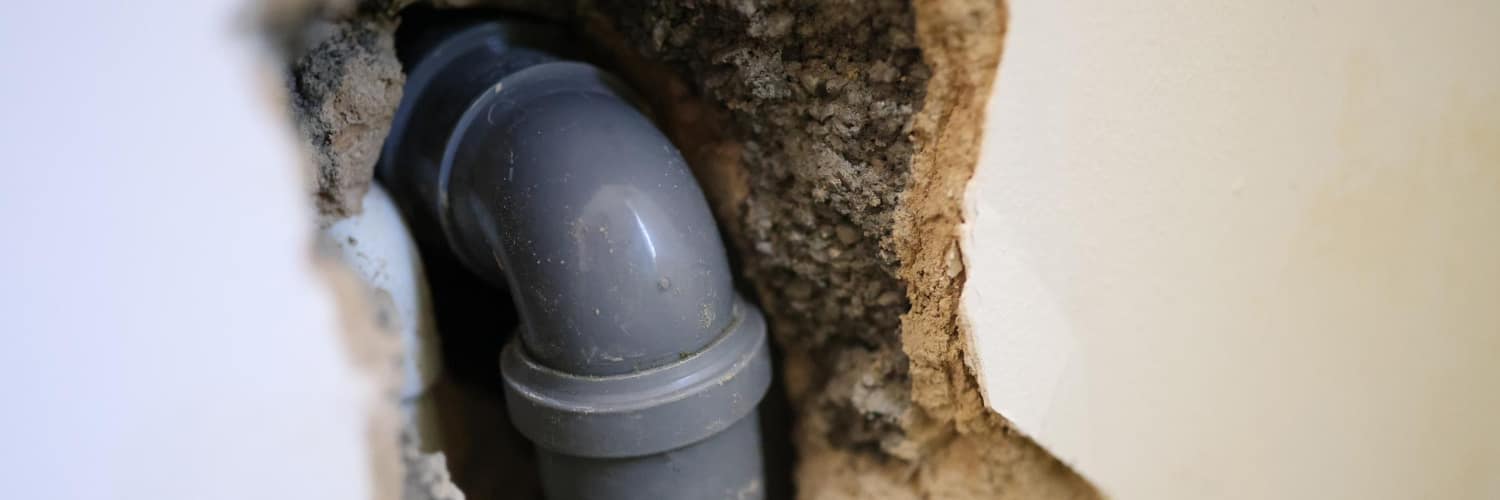
A sewer line leak beneath your Kirkland, WA property rarely announces itself with a dramatic flood or an obvious burst. Most of the time, it starts small, a hairline crack in an aging pipe joint or a root fiber threading its way through a gap you would never see from the surface. The damage builds quietly, week after week, while the leak saturates surrounding soil, weakens structural supports, and introduces contaminants into the ground around your home.
Kirkland homeowners are responsible for the side sewer line that connects their home to the public main, and that pipe may be decades old. Many homes across King County still rely on original clay, concrete, or cast iron pipes installed when the house was built, and those materials deteriorate over time. When a leak develops in one of these lines, every day it goes unaddressed adds cost, risk, and complexity to the eventual repair.
This article breaks down how a seemingly minor sewer line leak escalates into a serious property problem, and what Kirkland homeowners can do about it before the damage reaches that point.
You will also find the specific warning signs to watch for, both inside the house and out in the yard, along with an explanation of the repair approaches that protect your property rather than tearing it apart. If you are experiencing slow drains or suspect something is off with your sewer system, this is the guide to read first.
In this article, you will learn about:
- Where do these leaks come from in the first place?
- Your foundation and landscaping take the hit first
- The health risks hiding in your own yard
- What it actually costs when you wait too long
- How to tell if your sewer line is leaking right now
- Catching it early changes everything
Keep reading to understand exactly how a hidden sewer leak progresses over time so you can catch the problem early and protect your home and your investment.
Where do these leaks come from in the first place?
Not every sewer line leak comes from a catastrophic break. In most Kirkland homes, especially those built before the 1980s, leaks develop gradually through a combination of material aging, biological pressure from roots, and natural ground movement. Understanding the root causes helps you recognize your own risk before you are dealing with the consequences.
Most Kirkland pipes are older than you think
The material running beneath your yard depends almost entirely on when your home was built. Homes constructed before the 1960s across the greater Seattle and Kirkland area often have clay tile pipes, short sections joined by mortar or tar that become brittle and crack over decades. Homes from the 1940s through the 1970s may have Orangeburg pipe, a wood-pulp-based material that delaminates and collapses under soil pressure. Cast iron lines from the mid-century era corrode from the inside out, thinning gradually until pinhole leaks develop.
According to the U.S. EPA, the nation’s water infrastructure is aging and in need of repair, and the agency’s 2024 Clean Watersheds Needs Survey estimated that at least $630 billion will be needed over the next 20 years to maintain and upgrade wastewater and stormwater systems nationwide. That figure reflects a 73 percent increase from the previous survey in 2012, driven largely by deteriorating systems that were installed in the mid-twentieth century. The same era of pipes running under Kirkland streets and properties is part of this larger national picture.
King County homes built after the late 1970s were generally required to include at least one main building cleanout, and many used PVC or ABS plastic pipes that resist root intrusion and corrosion better than their predecessors. But if your home predates that window, the sewer line carrying waste from your house to the city main could be running on borrowed time.
Roots do not just block the line, they crack it open
The Pacific Northwest’s mild temperatures and frequent rainfall keep soil moist year round, and that moisture is exactly what tree roots seek. Roots can extend well beyond the visible canopy of a tree, and they are drawn to the water vapor that escapes from even the smallest crack or loose joint in a sewer pipe. Once a root fiber finds its way inside, it expands, catches debris, and gradually chokes the line.
According to Seattle Public Utilities, roots are a common problem in side sewers, and older concrete and clay pipes that were not constructed with watertight joints are especially vulnerable to root damage. Roots can crack pipes and cause sewer backups, and severe intrusions that obstruct 50 percent or more of the pipe diameter directly threaten the working condition of the side sewer. Kirkland sits in the same King County geography and shares the same tree species, soil conditions, and vintage pipe stock as neighboring Seattle, so the risk profile is virtually identical.
The damage from tree root intrusion is not limited to blockages. As roots widen cracks and separate joints, they create openings where wastewater leaks into the surrounding soil. That slow, steady leak is what eventually undermines the ground beneath your property. Knowing how to prevent and address root intrusion before it reaches that stage can save you from far more expensive repairs down the road.
The ground beneath your property is always moving
Even without roots or corroding pipes, the ground itself works against your sewer line over time. Soil in the greater Kirkland area shifts due to seasonal moisture changes, construction vibrations from nearby projects, and the natural settling that occurs as organic material decomposes underground. These movements can push pipe sections out of alignment, creating offset joints where wastewater pools and seeps out.
Heavy vehicle traffic above a shallow sewer line, whether from a delivery truck in a driveway or equipment during a neighboring construction project, adds compressive stress that can crack or deform pipes that are already weakened by age. Poorly compacted backfill around the original pipe installation can also settle unevenly decades later, leaving sections of the line unsupported and vulnerable to sagging. A sagging section, sometimes called a belly, traps standing water and waste, accelerating corrosion and making a leak nearly inevitable. These are among the most common problems that affect sewer laterals in older neighborhoods across King County.
Your foundation and landscaping take the hit first
Once a crack or joint failure starts releasing wastewater underground, the effects on your property are not hypothetical. They follow a predictable pattern that worsens the longer the leak runs. The soil beneath and around your home is the first casualty, and your foundation and hardscaping follow.
Underground voids form before anything looks wrong on the surface
A leaking sewer line saturates the surrounding soil with water that carries fine particles as it moves. Over weeks and months, that flow washes away the material supporting the ground above it, creating underground voids that are completely invisible from the surface. These hollow spaces represent genuine structural risk because anything resting on top of them, your foundation, your driveway, a patio, can begin to shift once the supporting ground is gone.
The U.S. EPA notes that sanitary sewer overflows and leaks damage property and the environment, and that cleanup can be expensive for homeowners and municipalities. The agency estimates that the nation’s sewer systems are valued at more than $1 trillion, and the cost of rehabilitation must be weighed against the added expense when these systems are allowed to deteriorate further. For an individual homeowner in Kirkland, the math is similar. A targeted sewer line repair today costs a fraction of a foundation remediation later.
Cracked driveways and tilting patios are not just cosmetic
As voids form beneath hardscaped surfaces, those surfaces begin to settle unevenly. A concrete driveway does not bend, it cracks. A paver patio does not flex, it separates and tilts. Sidewalks develop trip hazards. Retaining walls shift.
The progression is slow enough that homeowners often attribute the cracks to normal wear or seasonal movement rather than to a broken sewer pipe below. But when the cracks appear in a pattern that follows the general path of the sewer line, or when multiple surfaces start showing damage at the same time, the connection becomes difficult to ignore. Catching the underlying leak before the structural damage spreads is always less expensive than repairing both the pipe and the surfaces above it.
That suspiciously green patch of grass is not a good sign
One of the most reliable outdoor indicators of a sewer leak is a section of your lawn that looks healthier than the rest. Leaking wastewater acts as a fertilizer, feeding the grass directly above the damaged pipe with nutrients and constant moisture. While the rest of your yard follows normal seasonal patterns, that one strip stays unusually lush and green.
Soggy or soft spots in the yard, even during dry stretches, point to the same problem. If you notice standing water, a depression forming near the sewer line path, or a persistent foul odor in a specific area of your property, those are signs of an active underground leak. These visible symptoms typically mean the leak has been running for some time and has already begun displacing soil.
The health risks hiding in your own yard
A sewer leak is not just a plumbing inconvenience. It introduces raw sewage into the ground around your home, and the consequences extend well beyond property damage. The health and environmental risks are real, documented, and worth taking seriously.
Sewage carries pathogens, not just a bad smell
Wastewater escaping from a cracked sewer pipe contains bacteria, viruses, protozoa, and other pathogens. The U.S. EPA states that sanitary sewer overflows carry organisms that can cause diseases ranging from mild gastroenteritis to life-threatening conditions such as dysentery and infectious hepatitis. These pathogens do not stay neatly underground. They can migrate through soil, contaminate shallow groundwater, and find their way into crawl spaces or basements, especially if the leak is close to the foundation.
Sewer gas, a byproduct of decomposing waste, can also escape through cracks and seep into the home. Hydrogen sulfide, one of the primary components, produces the characteristic rotten-egg smell and can cause headaches, dizziness, and respiratory irritation at low concentrations. In enclosed spaces like crawl spaces or poorly ventilated basements, the risk is amplified. If the odor is concentrated in a lower level of your home, that smelly basement could be pointing straight to a sewer defect beneath the slab or foundation.
Why pest problems and sewer leaks go hand in hand
The moisture and nutrients in leaking wastewater attract insects and rodents. Rats, cockroaches, and other pests are drawn to the conditions that a sewer leak creates, and a crack in the pipe gives them a direct pathway toward the home’s foundation and utility penetrations. Homeowners dealing with unexplained pest problems, especially near the base of the house or in a crawl space, should consider a sewer camera inspection as part of the investigation.
This connection between pest activity and sewer damage is one of the less obvious consequences of a leak, but it is well documented. Addressing the pipe defect removes both the attractant and the access point, solving two problems at once.
Where does that wastewater actually end up?
Kirkland sits within King County’s wastewater service area, and property owners here are responsible for maintaining the side sewer that connects to the public system. When a private sewer line leaks, the wastewater it releases does not just sit in place. It migrates through the soil column and can reach groundwater or make its way toward local drainage systems.
The Washington State Department of Ecology requires communities to minimize untreated sewage reaching rivers, lakes, and Puget Sound, and state and federal law mandates that sewer systems control overflows except in extreme weather. While those regulations target public infrastructure, the same environmental principle applies to private lines. A leaking side sewer contributes to the broader contamination problem, and fixing it protects not just your property but the water quality of the Kirkland community.
What it actually costs when you wait too long
Every sewer leak starts as a manageable problem and ends as an expensive one. The financial math always favors early detection, because the costs compound in multiple directions once the damage spreads beyond the pipe itself.
A small crack today, a full replacement next year
A hairline crack in a pipe joint may only need a targeted repair or a section of sewer pipe relining when it is caught early. Left alone, that crack widens. Roots exploit the opening. Soil washes in. The pipe collapses. What could have been a straightforward fix becomes a full sewer line replacement, potentially with added costs for restoring the landscaping, driveway, or foundation elements that were damaged in the process.
A collapsed sewer line is the worst-case outcome, and it is almost always preceded by months or years of warning signs that went unaddressed. Kirkland homeowners who schedule periodic inspections and act on small problems early consistently spend less over the life of their sewer system than those who wait for a backup to force the issue.
Your water bill might be the first clue
A sewer leak underground does not always produce visible symptoms right away, but it often shows up on your utility bill first. When a damaged pipe allows groundwater to infiltrate the line (a condition called inflow and infiltration), or when the leak disrupts normal drainage and forces fixtures to cycle more water, your consumption creeps up without any change in your daily habits.
Homeowners often attribute a gradually rising water bill to rate increases or seasonal fluctuations rather than investigating the possibility of an underground leak. If your bill has climbed steadily over several months without a clear explanation, a sewer line diagnostic can determine whether a leaking or compromised pipe is the cause.
Do not count on your insurance to cover this
Standard homeowner insurance policies in Washington typically exclude damage caused by gradual wear, deterioration, or lack of maintenance, and that is exactly how insurers classify most sewer line failures. A root-intruded clay pipe that develops a leak over several years is not a sudden, accidental event in the eyes of an insurance adjuster. It is a maintenance issue, and the repair cost falls squarely on the homeowner.
Some insurers offer optional sewer line coverage as a rider, but the terms and limits vary. The practical takeaway for Kirkland homeowners is straightforward:
- Review your current policy to understand what sewer-related damage is and is not covered.
- Ask your insurer about optional sewer line riders if your home has older pipes.
- Keep records of inspections and sewer line maintenance, because a documented history of proactive care strengthens your position if you ever need to file a claim.
Relying on insurance to bail you out after a sewer failure is rarely a safe bet. Proactive maintenance and early repairs are the more reliable financial strategy.
How to tell if your sewer line is leaking right now
Catching a sewer leak early depends on knowing what to look for. The symptoms split into two categories: things you notice inside the house and things you spot outside in the yard. Neither set of signs should be ignored, because by the time they appear, the leak is already active.
What to listen and look for inside the house
The first signs of a sewer line leak often show up at your fixtures before they show up in your yard. Watch for these patterns:
- Multiple slow drains at the same time. A single sluggish sink is usually a localized clog, but when the kitchen sink, a shower, and a toilet all slow down together, the problem is deeper in the main sewer line.
- Gurgling sounds from drains or toilets. Air trapped behind a partial blockage gets displaced when water flows, producing a distinctive bubbling or gurgling noise.
- Sewage odor near floor drains or in the basement. Sewer gas escaping through a cracked pipe underground can migrate upward through the foundation and into lower-level living spaces.
- Recurring clogs that keep coming back after clearing. If you find yourself snaking the same drain every few months, the underlying issue is not the clog itself but a pipe defect that keeps catching debris in the same spot.
Any one of these symptoms warrants attention. Two or more occurring together strongly suggest a main sewer line problem rather than a fixture-level issue.
The outdoor clues most homeowners walk right past
Your yard provides its own set of warning signs, many of which are visible during a routine walk around the property:
- Unusually green or fast-growing grass in a strip or patch. Leaking wastewater fertilizes the soil directly above the damaged pipe.
- Soggy or soft spots that persist even during dry weather. Saturated soil from a leak does not dry out the way surface water does.
- Depressions or sinkholes forming near the sewer line path. These indicate that soil has eroded into underground voids created by the leak.
- Persistent foul odor in one area of the yard. Sewer gas escaping through saturated soil produces a sulfur or rotten-egg smell.
- Increased pest activity near the foundation or in outdoor areas. Rats, insects, and other pests are attracted to the moisture and nutrients in leaking wastewater.
If these symptoms line up along the general path between your house and the street, it is time to find out what is going on underground. The tree root sewer damage common in Kirkland properties often produces this exact combination of signs.
A camera inspection takes the guessing out of it
A video camera inspection is the diagnostic tool that turns guesswork into certainty. A small, waterproof camera travels through the inside of the pipe, transmitting real-time footage that shows the exact location and nature of any defect, whether that is a root mass, a cracked joint, a collapsed section, or a belly that is trapping waste and water.
For Kirkland homes with older pipes, an inspection can reveal problems that have not yet produced noticeable symptoms, catching a developing crack before it becomes a full leak. King County recommends that property owners maintain their side sewers proactively, and a camera inspection is the most direct way to assess the condition of the line without digging.
The inspection also guides the repair plan. Knowing exactly where the problem is, what caused it, and how much of the pipe is affected determines whether the fix is a targeted repair, a relining, or a full replacement, and it prevents the kind of exploratory digging that adds cost and disruption.
Catching it early changes everything
The best time to deal with a sewer line leak is before it has a chance to undermine your property. The tools and methods available today make it possible to catch problems early and resolve them with minimal disruption to your home and your yard.
Scheduled inspections vs. emergency calls at midnight
There are two approaches to sewer line maintenance, and the difference in cost and stress between them is substantial. Reactive maintenance means waiting until a backup forces an emergency call, which typically happens at the worst possible time and limits your options. Proactive maintenance means scheduling periodic camera inspections to monitor the condition of the line and addressing small issues before they escalate.
For Kirkland homes with older pipes or mature trees near the sewer line, an inspection every few years is a reasonable baseline. Homes that have a history of backups or root problems may benefit from annual inspections combined with periodic drain cleaning to keep the line flowing. The cost of a camera inspection is a small fraction of the cost of a full excavation or an emergency repair, and the information it provides lets you plan and budget for any needed work on your own timeline.
Trenchless repairs exist so your yard does not have to be torn apart
When a camera inspection identifies a problem, the repair does not necessarily mean digging up your yard. Trenchless sewer repair methods allow technicians to fix or replace damaged pipe from the inside, using a single access point rather than an open trench. These no-dig approaches have changed the math on sewer repair dramatically, preserving landscaping, driveways, and other surfaces that traditional excavation would destroy.
The two most common trenchless approaches are:
- Sewer lining (also called cured-in-place pipe or CIPP). A resin-coated liner is inserted into the existing pipe and cured in place, creating a seamless new pipe inside the old one. This method works well for pipes with cracks, root damage, or joint failures that have not fully collapsed.
- Pipe bursting. A bursting head breaks apart the old pipe while simultaneously pulling a new high-density polyethylene (HDPE) pipe into its place. This approach is suited for pipes that are too far gone for a liner, including lines with severe deformation or collapse.
Both methods produce a finished result that is more resistant to future root intrusion and corrosion than the original pipe. If you are unfamiliar with how these methods compare to traditional excavation, a closer look at the different sewer repair options available today is worth your time.
Matching the right fix to what the camera actually shows
The right repair method depends on what the camera inspection reveals. A single cracked joint in an otherwise sound pipe calls for a different solution than a line with root intrusion along its entire length. A collapsed section that has lost its structural shape may need pipe bursting, while a line with moderate deterioration across multiple joints may be a strong candidate for lining.
The key factors that guide the decision include:
- The material and age of the existing pipe
- The type, location, and extent of the damage
- Whether the line has maintained its round shape or has deformed
- The depth of the pipe and accessibility of connection points
- The proximity of the damage to the foundation, driveway, or other structures
A qualified technician will walk you through the options based on the inspection footage, explain what each approach involves, and recommend the solution that addresses the problem without unnecessary work. The goal is always a long-term fix, not a temporary patch that sends you back to the same problem in a year. If you are weighing whether a pipe bursting approach or a lining job is the better fit, the camera footage is what makes that decision clear.
Conclusion
Sewer line leaks are not the kind of problem that stabilizes on its own. Every week an active leak runs beneath your property, the soil around it erodes a little more, the risk to your foundation increases, and the eventual repair becomes more complex. The warning signs are there if you know what to look for, from slow drains and gurgling fixtures inside to lush patches and soft spots outside.
Kirkland homeowners who take a proactive approach, scheduling inspections, acting on early symptoms, and choosing the right repair when a problem surfaces, protect both the structural integrity of their property and the health of their household. Waiting for an emergency backup to force the issue almost always costs more in the end.
If you have noticed any of the signs described in this article, or if your home has older pipes and you have never had the line inspected, now is the right time to get a clear picture of what is happening beneath your property. Pro Sewer Repair provides camera inspections, trenchless repairs, and full sewer line solutions across Kirkland and the greater Seattle region. Reach out to schedule a diagnostic and get a straightforward answer about the condition of your sewer line.